Vorsorge
Why prevention and early detection are important, which risks can be influenced, and how you can meaningfully take preventive measures together.
5 min.
✨ Key Information at a Glance
Early detection: Identifying changes in good time can support treatment for certain illnesses. It is useful in cases where the benefit is well documented and conspicuous findings can be reliably investigated.
Why Prevention is Important
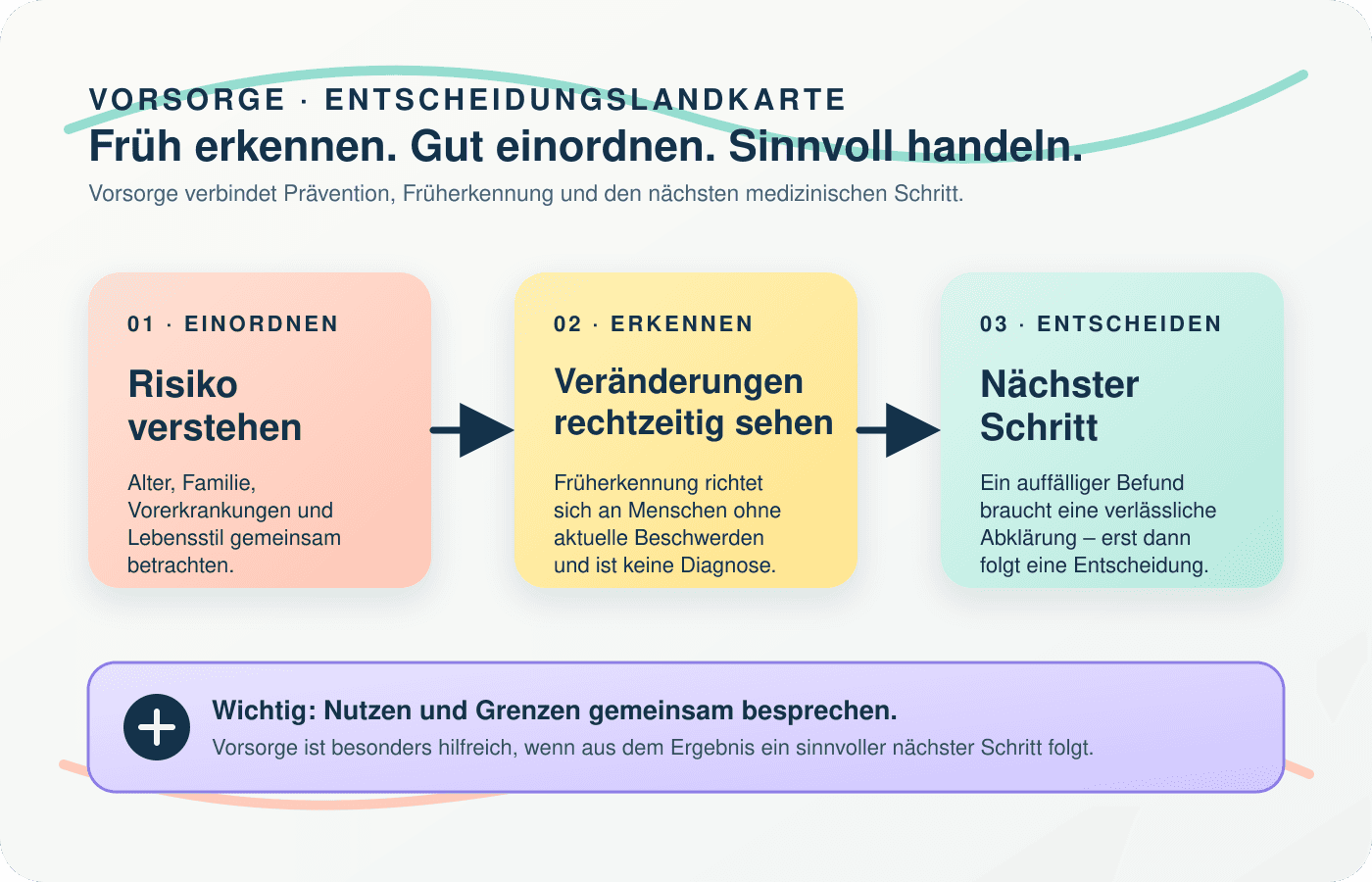
Prevention does not only begin when symptoms arise. It helps to identify personal risks, avoid illnesses as far as possible, and categorise changes medically in a timely manner. This allows appropriate measures to begin earlier.
Prevention Reduces Risks
Prevention is intended to prevent illnesses or reduce their likelihood. Depending on the situation, physical activity, a balanced diet, stopping smoking, moderate alcohol consumption, vaccinations, good sleep, and the treatment of risk factors such as high blood pressure or elevated blood sugar can help.
Early Detection: Identifying Changes in Time
Early detection screens for specific illnesses or their preliminary stages in people without current symptoms. It is useful when the benefit is well-documented, conspicuous findings can be reliably clarified, and appropriate treatment is possible.
Why Early Detection Can Support Treatment
For some conditions, an early diagnosis can improve treatment chances, avoid complications, or enable less stressful treatment. This is not a guarantee: tests can yield false-positive or false-negative results and necessitate further examinations.
What is Important in a Preventive Care Decision
Meaningful preventive care answers three questions: Which illness or risk is to be detected? How well is the examination scientifically documented? And how will a conspicuous finding be further clarified? Preventive care is particularly helpful when a clear, medically sensible decision can follow from the result.
Which Preventive Care Suits Me?
Which examination is sensible depends, among other things, on age, family risk, pre-existing conditions, medication, and life situation. Recommendations can also differ according to gender, pregnancy, occupational exposure, or previous findings.
Distinguishing Between Prevention and Symptoms
Preventive care is aimed at people without acute symptoms. New, persistent, or severe symptoms should be medically clarified promptly, independent of a preventive care appointment. In the event of a life-threatening emergency, call 144; for health advice in Austria, dial 1450.
Putting "Vorsorge Plus" (Extended Preventive Care) into Context
Selected private supplementary diagnostics can provide additional information for a specific medical inquiry. It is not part of the Austrian preventive health examination [Vorsorgeuntersuchung] and does not replace a medical examination, consultation, or individual diagnostics. Results should always be put into context together with symptoms and medical history.
⚠️ When should I consult a General Practitioner?
If you experience new, rapidly worsening, or severe symptoms, do not wait for a preventive check-up appointment, but have them medically evaluated. In the event of a life-threatening emergency, call 144; for health advice in Austria, dial 1450.
Sources
💡 Take-home Message
The health check provides a structured overview of important risk factors. The next steps will be discussed individually; acute complaints should be medically investigated independently of this.
Medical Advice
The information on this website is intended for general guidance only and does not replace an individual medical consultation, examination, or diagnosis. In the event of symptoms or health-related questions, please consult your physician.
🧭 What are the next steps?
1
Understand medical report
2
Assess your personal risk
3
Set individual goals
4
Monitor progress
5
If needed, plan treatment together
Medically reviewed by
Dr. med. Shahzada Amir, MSc, PhD