Diabetes & Stoffwechsel
A fatty liver often remains unnoticed for a long time. Abdominal fat, obesity, prediabetes, and diabetes can increase the risk – it is crucial to also assess the metabolic risk at an early stage.
4 min.
✨ Key Information at a Glance
A metabolically determined fatty liver is referred to today as MASLD.
It frequently occurs in combination with abdominal fat, overweight, prediabetes, or diabetes.
Many affected patients initially have hardly any symptoms.
What is important is not only the liver fat, but also the risk of fibrosis – meaning scarring.
Physical activity, weight reduction, and the treatment of metabolic risks can favorably influence the course of the disease.
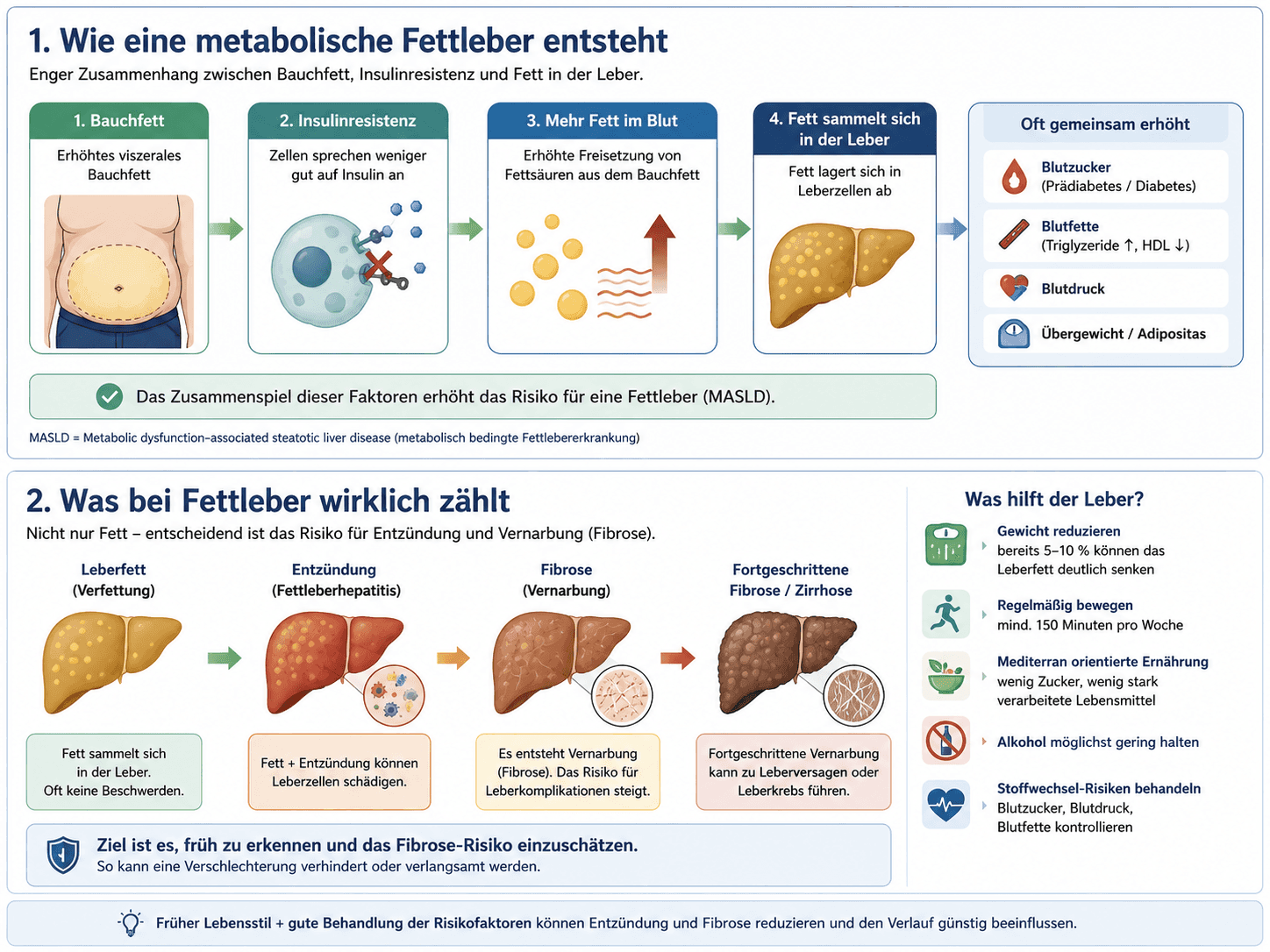
A fatty liver often remains unnoticed for a long time. It is frequently associated with abdominal fat, obesity, and disorders of glucose and lipid metabolism.
What is a Fatty Liver?
In a fatty liver, fat accumulates in the liver cells.
When metabolic risk factors exist at the same time, this is now referred to as MASLD – metabolic dysfunction-associated steatotic liver disease.
Why is Abdominal Fat Important?
Visceral abdominal fat is closely linked to insulin resistance and metabolic disorders.
The following frequently occur together: abdominal fat → prediabetes/diabetes → elevated blood lipids → fatty liver.
Do You Notice a Fatty Liver?
Often not at all. It is therefore not uncommonly discovered during laboratory tests, a preventive medical examination (Vorsorgeuntersuchung), or during an ultrasound.
Why is Fibrosis Important?
Not every fatty liver leads to severe liver damage. However, in some of those affected, inflammation and progressive scarring of the liver can develop.
Therefore, in patients with elevated risk, the question is not only "fatty liver yes or no?", but also the assessment of the risk of fibrosis.
What Helps the Liver?
Reducing weight if overweight exists
exercising regularly
eating a Mediterranean-style diet
reducing highly processed foods and sugary drinks
well-managing diabetes, blood pressure, and blood lipids
keeping alcohol consumption as low as possible
Healthy weight loss: what works in the long term →
Quick Questions
Can a fatty liver improve again?
Yes. Early changes in particular can improve significantly through weight reduction, physical activity, and treatment of metabolic risk factors.
Are elevated liver values always a fatty liver?
No. Elevated liver values have many possible causes and require medical assessment.
Does every fatty liver require medication?
No. Treatment is based on metabolic risks, comorbidities, and the severity of the liver disease.
Is an ultrasound alone sufficient?
An ultrasound can detect fatty infiltration. In cases of elevated risk, additional examinations to assess fibrosis may be beneficial.
For cases of obesity or metabolic risk factors: Medical weight management · Book an appointment (Termin vereinbaren) →
⚠️ When should I consult a General Practitioner?
Particularly useful for:
Type 2 diabetes
pronounced abdominal fat
obesity combined with other metabolic risks
repeatedly elevated liver values
incidentally detected fatty liver on ultrasound
Depending on the individual situation, laboratory parameters, metabolic markers, and existing ultrasound findings (Ultraschallbefunde) can be assessed together.
Sources
EASL–EASD–EASO
Clinical Practice Guidelines on the management of metabolic dysfunction-associated steatotic liver disease (MASLD), 2024
Austrian Health Portal (Österreichisches Gesundheitsportal)
Fatty liver
Austrian Health Portal (Österreichisches Gesundheitsportal)
Metabolic syndrome
💡 Take-home Message
Fatty liver is often a metabolic signal – we must look beyond just the liver. Abdominal fat, blood sugar, blood pressure, and blood lipids are interconnected. Early detection is worthwhile: lifestyle adjustments and treating risk factors can favorably influence the course of the condition.
Medical Advice
The information on this website is intended for general guidance only and does not replace an individual medical consultation, examination, or diagnosis. In the event of symptoms or health-related questions, please consult your physician.
🧭 What are the next steps?
1
Understand medical report
2
Assess your personal risk
3
Set individual goals
4
Monitor progress
5
If needed, plan treatment together
👵 In advanced age
Treatment goals and therapies are individually tailored to your personal situation.
Concomitant diseases
Medications
Mobility
Memory / Cognition
Self-employment (Selbstständigkeit)
Therapeutic safety
Therefore, in older age, different treatment goals may be appropriate than for younger individuals.
Source: Austrian Diabetes Society — Geriatric Aspects of Diabetes Mellitus (2026 Update)
Children & Adolescents
For the diagnosis of diabetes, the same threshold values generally apply as for adults.
However, clarification, care, and therapy must be carried out in an age-appropriate and family-friendly manner.
In the case of abnormal values, a pediatric or pediatric-diabetological evaluation is recommended.
Source: Austrian Diabetes Association (Österreichische Diabetes Gesellschaft) — Diabetes Mellitus in Childhood and Adolescence (Update 2026)
bluthochdruck-verstehen
Medically reviewed by
Dr. med. Shahzada Amir, MSc, PhD